Finding Calm Between Dental Visits in Sterling
Feeling nervous about the dentist is very common. For many people, the worry does not stay in the office; it shows up in the middle of the night, weeks before a visit, or every time a reminder pops up on the phone. You might catch yourself putting off scheduling, replaying past visits in your head, or losing sleep before a cleaning.
That does not mean you are weak or difficult. It just means your brain is trying to protect you from something it sees as scary. With gentle, personalized care, that fear can soften. At Ridgetop Dental in Sterling, we focus on comfort, modern technology, and a personal touch so you can feel more at ease, step by step.
Here, we will talk about simple coping tools you can use at home, how to track what sets off your dental anxiety, and when it might be time to ask about sedation or other comfort options. If you are thinking about summer trips, graduations, or group photos, this is a good time to start feeling calmer so you can smile with more confidence, not just this season but all year long.
Understanding Your Dental Anxiety Triggers
Anxiety often feels big and fuzzy, like a gray cloud you cannot grab. Breaking it into smaller parts helps. The first step in dental anxiety treatment in Sterling, VA is to notice what, exactly, makes your body tense up.
Common triggers include things like:
- The sound or vibration of dental tools
- The smell of a dental office
- Needles or numbing shots
- Lying back and feeling out of control
- Memories of a past difficult experience
Between visits, try tracking these triggers in simple ways:
- Keep a tiny "dental feelings" note on your phone
- When you see a dental ad, hear a friend talk about a visit, or get a reminder text, jot down what you feel
- Notice when anxiety spikes most, at night, on Sundays, or right after you confirm an appointment
Think of your anxiety like a dashboard warning light in your car. It does not mean the whole car is broken or that you are in danger right now. It is a signal that something needs attention. When you bring that "warning light" to your dental team, we can work with you instead of guessing.
At Ridgetop Dental, we believe in "No judgment, only solutions." If you share your list of triggers, we can build a comfort plan around what you need. Honest, compassionate talks like this are at the heart of effective dental anxiety treatment in Sterling, VA.
Everyday Coping Tools You Can Use All Year
Life in Northern Virginia can be busy and stressful on its own. You need tools that are quick, gentle, and realistic, not something that takes an hour a day. Here are a few that fit into real life.
Simple breathing routines:
- Inhale slowly through your nose for a count of 4
- Hold for a count of 4
- Exhale gently through your mouth for a count of 6
- Repeat for one or two minutes in the car, on your lunch break, or before bed
"Worry windows" can also help. Set a timer for 5 minutes. Write down every dental worry that jumps into your mind. When the timer ends, close the notebook or note app and tell yourself, "I will come back to this in my next worry window." You are not ignoring the fear; you are giving it a safe box.
Grounding tools are helpful when your mind runs ahead:
- Look for 5 things you can see.
- Notice 4 things you can feel (your clothing, the chair, your feet on the floor).
- Listen for 3 sounds you can hear
You can also build a small "comfort kit" for both appointments and reminders:
- A calming playlist and earbuds or headphones
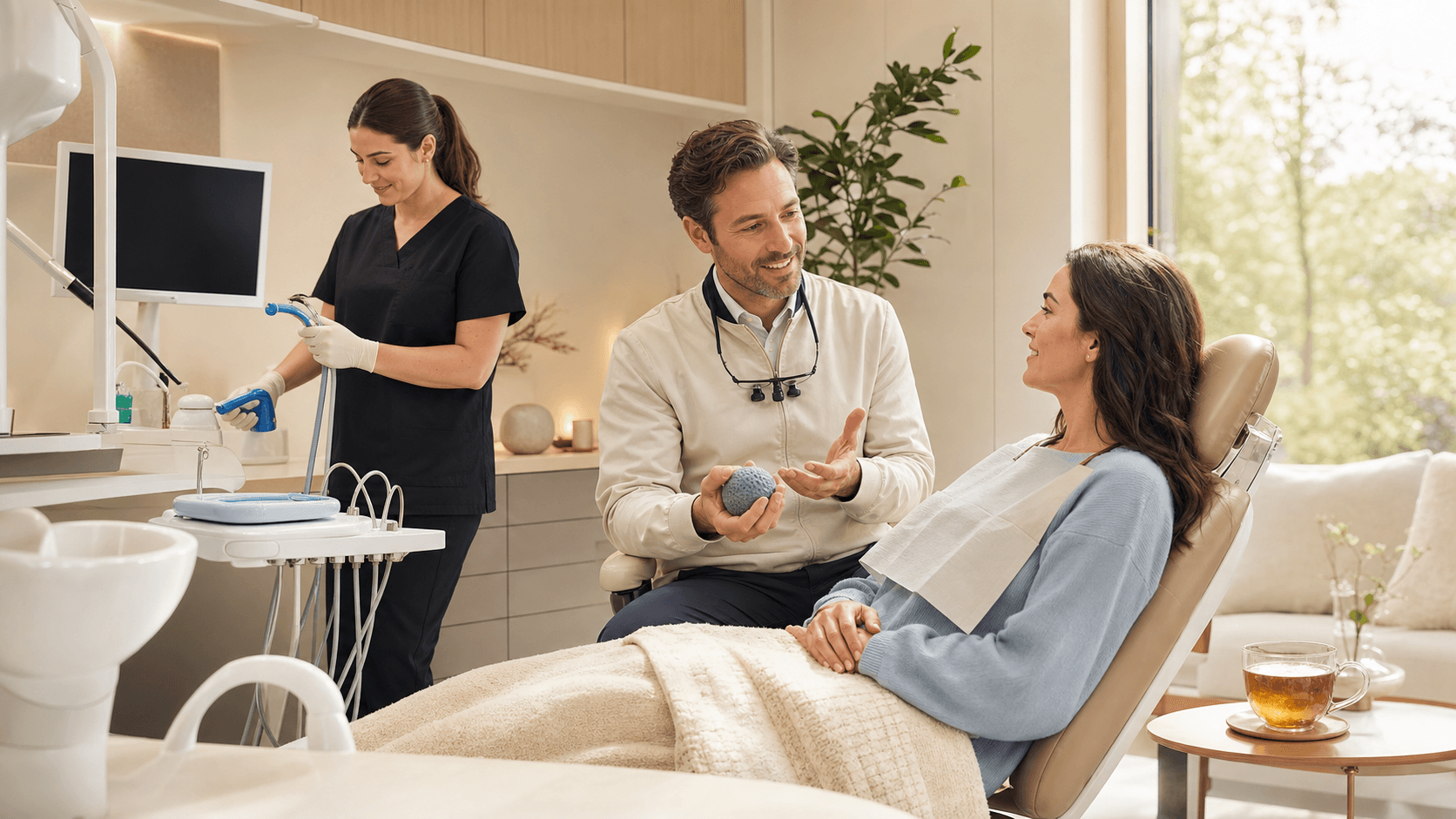
- A stress ball or smooth stone to hold
- A light jacket or sweater so you feel more secure in the chair
Over time, pairing these tools with positive visits can change how your brain sees dental care. Modern technology at Ridgetop Dental, such as quieter tools, digital X-rays, and comfort-focused techniques, often makes each visit easier than people expect. We have seen patients who used breathing exercises and music between visits go from putting off care to walking in a bit early, feeling proud that they showed up for themselves.
When you tell us what helps you cope, we listen. Patient care comes first, and you are in good hands when you trust us with your comfort needs.
How We Make Visits Easier Before You Sit Down
Dental anxiety treatment in Sterling, VA does not start only when you sit in the chair. It starts with how your visit is planned and how we talk with you before you arrive.
There are comfort-focused options we can offer when you schedule, such as:
- Extra time for your appointment so nothing feels rushed
- A short "meet-and-greet" visit to tour the office and talk with the team
- Early morning or quieter time slots to keep waiting-room stress lower
Sharing your triggers and preferences ahead of time lets us build a personalized comfort plan. We might ask:
- Do you like detailed, step-by-step explanations, or would you rather hear less and just know the basics?
- Would a simple hand signal, like raising your hand to pause, help you feel more in control?
- Do you want music or a blanket ready in the room?
Some people call and say, "It has been years; I am embarrassed." Our answer is always kindness, not blame. We talk through a simple plan, usually starting with a relaxed exam and conversation instead of jumping into treatment. Many patients tell us that just knowing there is a clear, gentle plan makes returning feel possible.
We repeat certain phrases because we mean them: We make it easy. No judgment, only solutions. Modern dentistry with a personal touch. Comfort is built into each step, from your first phone call to the ride home.
When to Ask About Sedation and Extra Comfort Options
Sedation is not only for "extreme" cases. It is one of several tools we can use when anxiety keeps you from getting care or makes every visit feel overwhelming.
It may be time to ask about sedation at Ridgetop Dental if:
- You keep delaying or canceling visits, even when you have pain or swelling
- You feel panicky days or weeks before an appointment
- You cannot relax in the chair because of past difficult experiences
- You need a lot of work and worry you cannot sit through it comfortably
Comfort options can include:
- Calming medication you take before your visit to help your body feel more relaxed
- Gentle medication that makes you feel very sleepy while we closely monitor you, so you remember little and feel more at ease
- Numbing gels and modern numbing techniques that make getting numb more comfortable
Safety and trust are always at the center of any plan. We use modern technology and careful monitoring so you are supported from start to finish. For many people, knowing these options exist is a relief by itself.
Talking about sedation is a normal part of personalized dental anxiety treatment in Sterling, VA. Your questions are welcome and never a bother. We want you to understand your choices and feel heard every step of the way.
Taking Your Next Gentle Step Toward a Calmer Smile
There is no perfect time to feel less anxious. There is only the next small, gentle step. That might be writing down your triggers tonight, breathing through one worry episode instead of avoiding it, or planning a simple checkup so you can see how different care can feel.
At Ridgetop Dental, we hope you will think of us as your trusted dental home in Sterling, VA, a place focused on comfort, family, and lasting results, not judgment or lectures. Dental anxiety does not have to stand between you and eating comfortably, laughing in summer photos, or smiling with confidence all year long. When we work together, we make each step easier, and those small steps add up to a calmer, healthier smile.
Take The First Step Toward Comfortable, Stress-Free Dental Care
If anxiety has kept you from getting the care you need, we are here to help you feel safe, heard, and in control at every visit. At Ridgetop Dental, our team uses gentle techniques, clear communication, and personalized options to support effective dental anxiety treatment in Sterling, VA. Schedule an appointment today so we can talk through your concerns and create a plan that fits your comfort level. Together, we can help you protect your oral health without fear or overwhelm.